
On the South Shore, two homes on the same street can need completely different window configurations. A bungalow with large front openings does not behave like a condo with building rules, and a semi-detached home does not always need the same window layout as a split-level or townhouse.
Choosing the right window style in Saint-Constant is not only about curb appeal. It is about air sealing, ventilation, glass area, opening clearance, exposure, comfort, and how the window integrates with the existing rough opening. The product matters, but the fit and installation details matter just as much.
Match the window style to the home type
Many homeowners start with a simple assumption: replace the old window with the same style. Sometimes that works. If the current layout fits the façade, gives enough airflow, and does not create comfort issues, keeping a similar configuration can make sense.
But in many homes around Saint-Constant, Sainte-Catherine, Delson, Candiac, and nearby South Shore communities, the existing windows were chosen years ago for a different use. A basement may now be finished. A kitchen may have been opened up. A front living room may need better comfort in winter. The original window layout is not always the best one for how the house is used today.
For a bungalow, large front windows usually affect light, comfort, and exterior balance. A mix of fixed glass and operable sections may work better than repeating the same opening style everywhere. For a basement, a sliding window or another compact opening style may be more practical, especially where interior or exterior clearance is limited.
For a semi-detached home or townhouse, the façade is often narrower. Window choices need to consider symmetry, airflow, privacy, and the distance to neighbouring homes. A casement window can work well in many rooms, but the opening direction and wind exposure should be checked before deciding.
For a condo, the decision may be more restricted. Exterior colour, visible configuration, frame profile, and window style may be controlled by the condo board or building rules. It is better to confirm those limits before comparing models, because discovering them later is the kind of expensive nonsense humans keep inventing for themselves.
Common window styles and where they fit
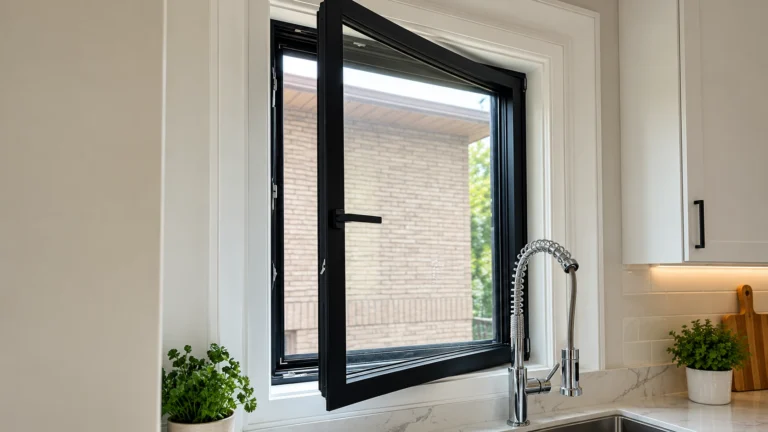
A casement window is hinged on the side and opens outward. It is often chosen for good air sealing and strong ventilation. When properly measured and installed, it can help reduce drafts and improve comfort near the opening. It is commonly used in bedrooms, living rooms, and other spaces where wide ventilation is useful.
An awning window is hinged at the top and opens outward from the bottom. It can be useful in bathrooms, basements, and rooms where controlled ventilation is needed. Because of the way it opens, it can sometimes allow airflow during light rain, depending on the location and exposure.
A sliding window is often practical for horizontal openings, basements, and tighter spaces. It is not automatically a weaker choice, but performance depends on the product design, frame, glazing package, weatherstripping, and installation quality. The trap is thinking one style is always superior. Buildings do not care about brochure logic.
Single-hung and double-hung windows can suit more traditional homes. They open vertically and can preserve a classic exterior look. They should still be compared for air leakage, ease of use, cleaning access, and comfort expectations.
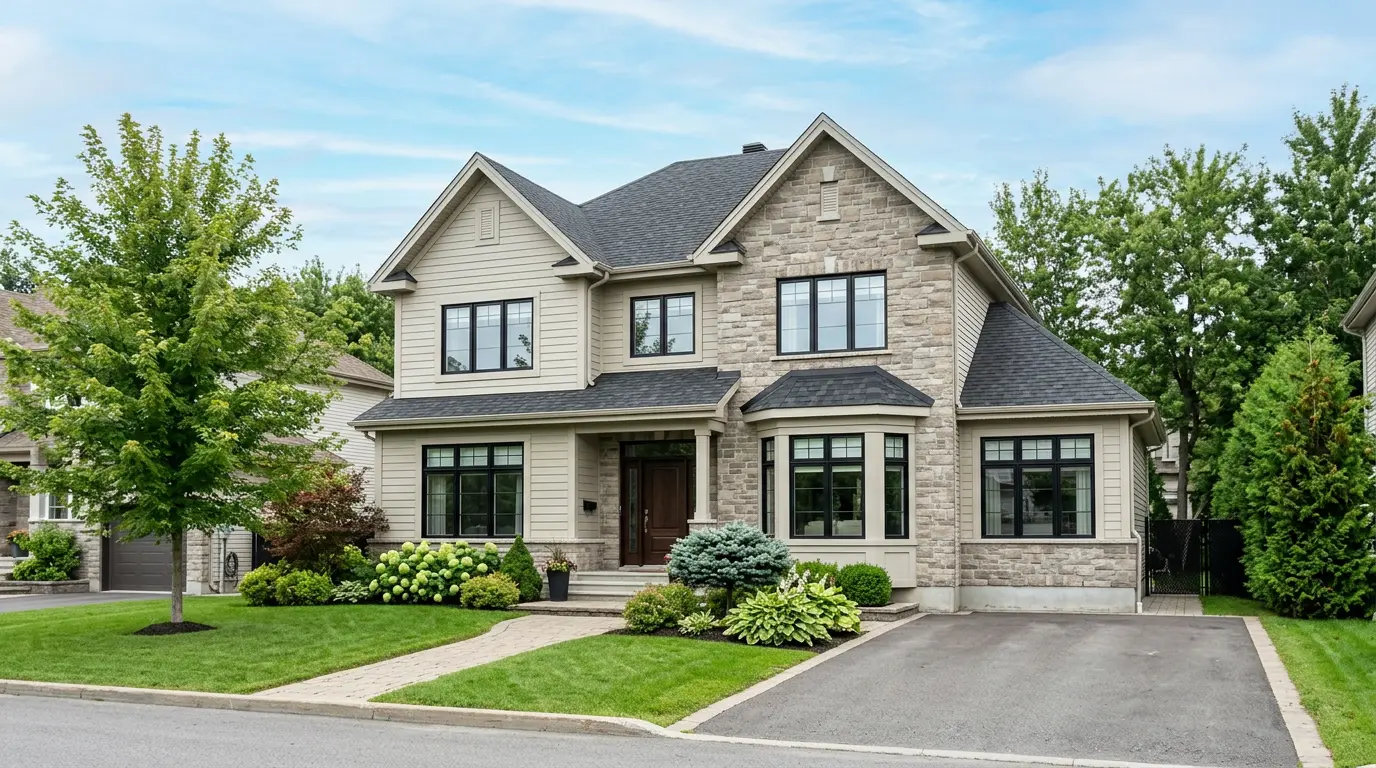
Bay or bow-style windows can add light and depth to a front room or living area. They can look good, but they are more complex. The structure, support, water management, insulation, and finishing details need to be reviewed carefully. It is not the type of upgrade to choose only because it looked nice online.
What to check before choosing
A window is part of the building envelope. That means it does not perform alone. The frame, wall opening, exterior finish, interior trim, flashing, insulation, and air sealing all affect the result.
Before choosing a style, homeowners should look at:
- The type and age of the home
- The current window condition
- The use of each room
- Sun, wind, and moisture exposure
- Exact rough opening dimensions
- Desired ventilation
- Winter comfort near the glass
- Condo or exterior design restrictions
- Full-frame versus insert replacement options
- Interior and exterior finishing needs
At this stage, it is useful to compare window options around Saint-Constant based on the actual home, not only on what style is most common.
Energy performance: useful, but not magic
Window style affects comfort, especially when the existing units are old, hard to close, poorly sealed, or at the end of their useful life. A better window can help with indoor temperature stability, drafts near exterior walls, and overall comfort.
But the window style is only one layer of the stack. The glass package, frame material, spacer, air sealing, measurements, installation method, and condition of the opening all matter. A high-performance product can underperform if it is poorly integrated into the wall assembly. Basically, specs are nice, but reality still has admin rights.
For product selection and efficiency terms, the NRCan guidance on windows, doors, and skylights is a useful reference for understanding ratings and performance features.
Energy improvements are usually more noticeable when older windows are drafty, fogged between panes, difficult to close, or poorly fitted. If the existing windows are already recent and properly installed, the improvement may be more modest. The most expensive option is not automatically the right one.
What a proper assessment should clarify
A good replacement plan should not start with “put casements everywhere.” It should start with the opening.
A project assessment should look at the frame condition, exact measurements, signs of air or water infiltration, exterior finish, interior trim, opening clearance, wall condition, and consistency with the rest of the home. The installer also needs to understand how each room is used. A bedroom, kitchen, basement, and front living room do not all need the same setup.
A common homeowner misconception is blaming the window style for every issue. A hard-to-open window may be caused by age, poor original measurement, frame movement, worn components, or installation problems. In other cases, the style itself is fine, but it no longer fits the room’s current use.
This is also where overspending can be avoided. Some homes benefit from replacing several windows at once. Others can be planned by zones: front façade, bedrooms, basement, or rooms most exposed to wind. Replacing everything is not automatically the smartest move.
Budget, timing, and project priorities
Cost depends on the number of windows, window style, size, glass package, frame material, access, opening condition, finishing work, hardware, and whether the project is full-frame or insert-based. Larger openings, custom sizes, bay or bow configurations, and more complex exterior finishing can raise the total cost.
Timing also matters in Quebec. Many homeowners prefer to plan before winter or before interior renovations. Product availability, measuring, scheduling, and project complexity can all affect timelines.
The right choice is rarely “the cheapest unit” or “the highest-rated unit on paper.” It is the option that fits the house type, room use, exposure, comfort goal, and existing opening condition. Choosing the right window style in Saint-Constant is mostly about avoiding automatic decisions and matching the product to the actual building.
Questions homeowners often ask
Are casement windows always the best option?
No. Casement windows are popular because they can provide strong air sealing and good ventilation, but they are not ideal for every opening. Clearance, wind exposure, room use, and façade design still matter.
Should a bungalow keep the same window style as before?
Sometimes, but not always. If the layout works well, keeping a similar configuration can make sense. If the rooms have changed or comfort is poor, a different combination of fixed and operable sections may be better.
Can condo owners choose any window style?
Usually not without checking first. Condo rules may limit the exterior colour, configuration, frame appearance, or visible style. Those rules should be confirmed before planning the replacement.
Does window style really affect comfort?
Yes, but it works together with the rest of the window system. Style affects ventilation and sealing, while glazing, frame quality, measurement, air sealing, and installation affect the final performance. A good result depends on both the product and how it is installed.