
During a renovation, one small idea can turn into a much larger project.
“If we are replacing this window anyway, why not make it a little bigger?”
The question is completely reasonable. Changing window size during replacement can improve natural light, ventilation, or the layout of a room. But changing the actual opening is not the same as simply ordering a larger or smaller window.
Once the opening itself changes, the wall and surrounding finishes become part of the project. Walls, being walls, rarely volunteer for extra work for free.
Keeping the same opening is usually simpler
In a standard replacement project, keeping the existing opening dimensions generally helps limit the scope of the work.
That does not necessarily mean the new window has to be identical to the old one. In some cases, the style or configuration can change while still fitting within the same opening.
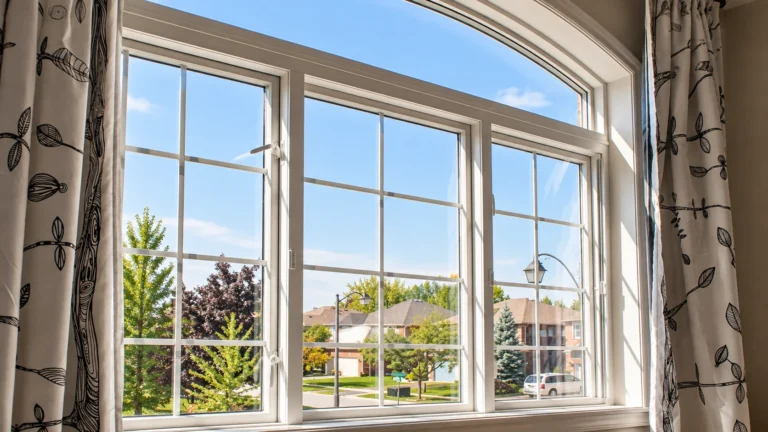
For example, a large existing window may sometimes be changed from a mostly fixed configuration to a combination of fixed and operable sections, depending on the dimensions and the needs of the room.
That kind of change can improve usability without turning the project into a major wall modification.
When making a window larger can make sense
A larger window can be worthwhile when there is a clear goal.
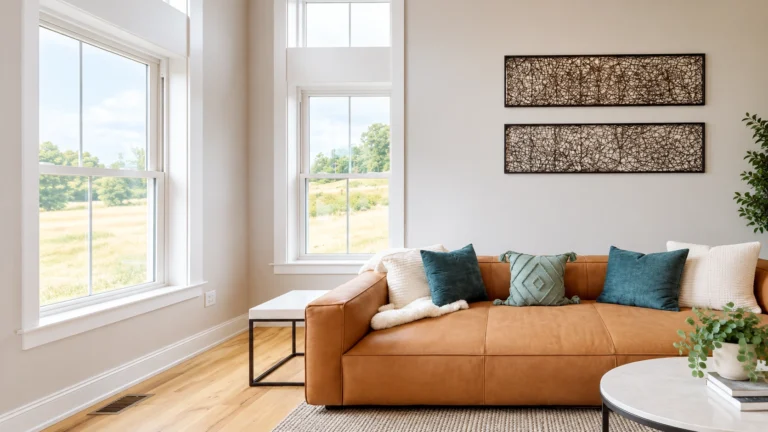
In a renovated kitchen, a new cabinet or countertop layout may make the existing opening less practical. In a living room, a larger glass area may improve natural light. In some rooms, a different opening size may also support a more useful ventilation layout.
The key is to avoid enlarging a window simply because bigger seems better.
A larger opening usually means more glass and may affect interior trim, exterior cladding, wall finishes, and the opening itself.
The benefit should justify the extra complexity.
What about making a window smaller?
Reducing an opening can also make sense.
A new kitchen layout may need more wall space. A redesigned room may no longer need as much glass. In a broader renovation, a smaller opening may fit the new layout better.
But again, this is not just a matter of ordering a smaller unit.
The unused portion of the old opening has to be properly integrated into the wall assembly, insulation, interior finish, and exterior finish.
A change that looks simple on a sketch can therefore create more work than expected.
A larger window does not automatically mean a less comfortable home
A larger glass area can bring in more daylight and improve the view. That is often the main reason homeowners consider it.
From an energy-performance perspective, however, the full window system matters.
Glazing, frame design, U-factor, ER rating, air leakage, and installation quality all play a role. Orientation can also affect solar gain and comfort inside the room.
The Natural Resources Canada guidance on windows and doors can help homeowners understand which performance features are worth comparing when choosing a new unit.
It is also worth avoiding the opposite assumption: a smaller window is not automatically more efficient, and a larger one is not automatically uncomfortable.
Performance depends on much more than glass area alone.
What should be checked before changing the opening?
Before changing window size during replacement, the opening should be evaluated in context.
Important factors include:
- the condition of the existing frame and surrounding wall;
- current opening dimensions;
- interior finishes;
- exterior materials;
- how the room is used;
- sun and wind exposure;
- the planned window configuration.
It is also important to distinguish between changing the window and changing the opening.
Sometimes a homeowner can improve ventilation, appearance, or functionality simply by choosing a different window configuration within the existing dimensions.
That option is worth considering before enlarging or reducing the wall opening.
This is often where unnecessary work, cost, and complication can be avoided.
Renovation timing can make a big difference
One of the most logical times to modify an opening is when a larger renovation is already affecting the room.
If drywall, trim, paint, or exterior finishes are already being replaced, some of the work related to changing the opening may be easier to coordinate within the overall project.
Doing the same modification a few months after completing all the new finishes is usually much more frustrating.
Coordination is therefore almost as important as the size change itself.
When comparing window options around Saint-Constant, it helps to clarify early whether the goal is simply to replace the existing product or to change the opening itself.
Basement windows and room-use changes
Basement windows sometimes require a different level of planning, especially when the use of the room changes.
For example, a homeowner finishing a bedroom may need to determine whether the existing opening is appropriate for the new use. In that kind of situation, applicable requirements should be checked based on the actual building and project.
It is better not to rely on a generic dimension found online. Compliance requirements can depend on context, and code-related questions should be confirmed through official resources or the appropriate qualified professionals.
A similar issue can come up in condos. Changes visible from the exterior may be limited by condo rules, so those restrictions should be checked before ordering anything.
How does changing the size affect the budget?
Changing window size can increase project cost because the work may go beyond the window itself.
Possible cost factors include modification of the opening, new finishes, exterior materials, access, custom sizing, and the overall complexity of the work.
That does not mean changing the opening is a bad idea. It simply means there should be a clear reason for doing it.
If a larger window genuinely improves daylight, ventilation, or the layout of an important room, the change may make sense.
If the goal is mainly to achieve a slightly different appearance, keeping the existing opening and changing the window configuration may be the simpler option.
Questions homeowners often ask
Can I install a larger window than the existing one?
It may be possible, depending on the project, but the opening, wall, finishes, and building configuration should be assessed first. It is not always a simple window replacement.
Is it much more expensive to change the window size?
It can increase cost because additional work around the opening may be required. The amount depends on the building and the size of the change.
Is a larger window less energy efficient?
Not automatically. Performance depends on glazing, frame design, energy ratings, installation quality, and exposure.
Is it better to change the opening during an interior renovation?
Often, that is a more logical time to evaluate the change because some finishes are already being redone. The benefit should still be weighed against the added complexity and cost.