
A basement window may seem like a minor feature until the room becomes cold, dark, or difficult to ventilate. In Châteauguay, snow buildup, runoff, and freeze-thaw cycles can also place more stress on openings located close to ground level.
Before planning a basement window replacement in Châteauguay, look beyond the glazing. The room’s use, opening dimensions, outdoor clearance, and the condition of the materials around the window can all influence the product choice.
Start With How the Basement Is Actually Used
A small window may be perfectly adequate in a storage room but much less practical in a bedroom, home office, or family room. The first question is not simply, “Which window fits the opening?” It is, “What does this room need?”
Natural light and ventilation generally matter more in a living space. In a bathroom, privacy may be the first consideration. A basement bedroom can also raise questions about emergency-exit requirements.
Consider both the room’s current use and how it may be used later. Installing a small fixed window in a room that could eventually become a bedroom may limit future options.
Measure the Complete Opening, Not Just the Glass
A common mistake is to measure the glass or the operable sash and assume that measurement represents the available opening. A project assessment should instead consider the entire frame, sill, finishes, and, when accessible, the rough opening.
It is also necessary to determine whether the replacement will keep the existing dimensions. Enlarging an opening in a foundation wall is a very different project from installing a new window within an existing opening. The scope, schedule, and budget can change considerably.
A custom-sized product may allow the current opening to be retained. However, that is not always the best option if the existing dimensions no longer meet the room’s intended use.
Balance Natural Light, Ventilation, and Privacy
Clear glass is generally the simplest way to maximize natural light. However, a basement window close to a walkway, entrance, or neighbouring property may require more privacy.
Privacy glass can reduce direct visibility while still allowing light into the room. An interior window covering is another option, but depending on its position, it may reduce available light or interfere with the window’s operation.
Ventilation depends primarily on the operating style. A large glass area does not necessarily provide a large usable opening. Compare the window’s total dimensions with the portion that can actually open.
Check Water Exposure and Frame Condition
A window located near ground level is more exposed to runoff, snow, and moisture than many upper-storey windows. Before selecting a replacement, examine the outdoor clearance, window well if one is present, ground slope, and visible marks around the opening.
Water near the frame does not automatically mean the window is the only source of the problem. Grading, drainage, the window well, or the foundation may also be involved. Replacing the window without identifying where the water originates could leave the main issue unresolved.
Cold interior surfaces and condensation should also be assessed. They may be related to the window, its installation, indoor humidity, or several factors at once. Installation quality varies between projects and remains as important as the product specifications.
When Can Egress Requirements Apply?
A common misconception is that every basement window must automatically be an egress window. Requirements can vary according to the room’s use, the building, the project scope, and the rules that apply to the property.
If the basement includes a bedroom or a change of use is planned, the requirements should be confirmed before ordering the window. A manufacturer describing a model as “egress” is not enough by itself. The clear opening, operation, outdoor clearance, and window-well configuration may all matter.
The Régie du bâtiment du Québec provides information about the laws, regulations, and codes that apply to buildings. Municipal confirmation or advice from a qualified professional may still be required for a specific project. Avoid applying one universal dimension to every house.
Compare the Main Basement Window Styles
The appropriate style depends on the shape of the opening and the available space. Fortena’s page on basement and egress window installation presents options intended for this type of project.
Sliding Window
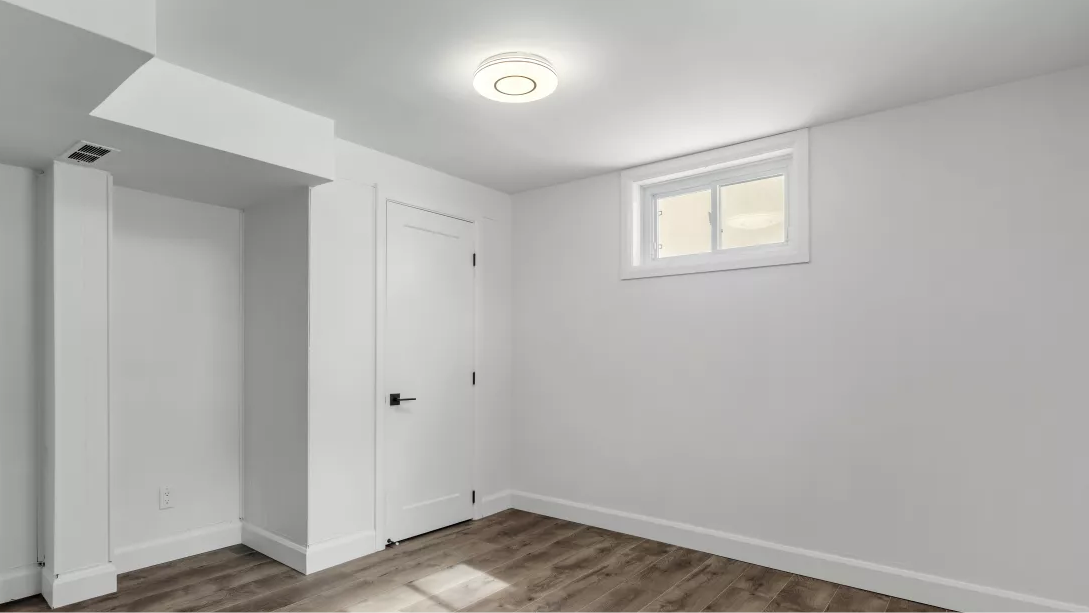
A sliding window often works well in a wide horizontal opening. Because it does not project outward, it can be practical where the window well or exterior clearance is limited.
However, only part of the total window normally opens. The clear opening may therefore be smaller than expected when compared with the overall frame dimensions.
Awning or Casement Window
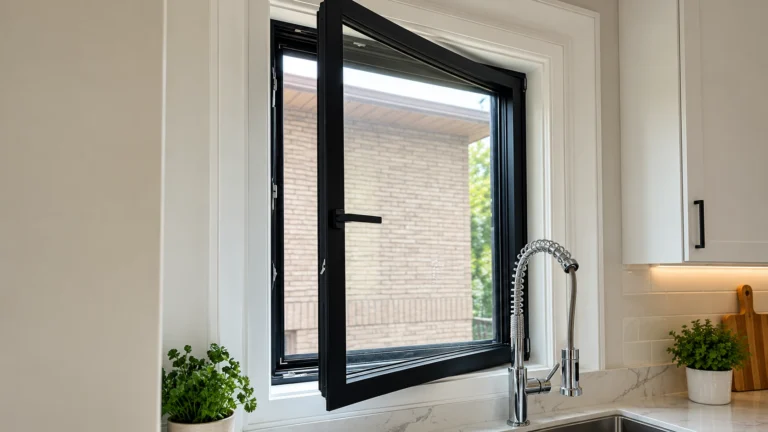
These styles can provide a useful operable opening, depending on their size and configuration. They require enough exterior clearance for the sash to move freely.
A narrow window well, nearby obstacle, or snow accumulation may restrict operation. The opening direction and available space should therefore be checked before selecting the model.
Fixed Window
A fixed window can provide natural light and has fewer moving components. It offers no ventilation and cannot serve as an emergency-exit opening.
This style is better suited to rooms where ventilation and egress are not required.
What Affects Project Cost and Scope?
The cost can depend on the window dimensions, operating style, glazing, finishes, and access to the opening. Custom manufacturing or changes to the foundation opening can also expand the scope of the project.
For a basement window replacement in Châteauguay, exterior conditions are often easier to inspect before heavy snow accumulation. This makes it easier to see the window well, surrounding ground, and materials around the opening.
It is not always necessary to choose the highest-performing glass package or replace every basement window at the same time. A small, sheltered window may have different requirements from one used daily in a finished living space. Spending more without considering how the room is actually used does not automatically improve the result.
Plan the Replacement Around the Complete Opening
A basement window should be selected according to the room, the existing opening, and the conditions around the foundation. The operating style is only one part of the decision.
A careful assessment helps distinguish a straightforward replacement within the existing opening from a more complex project. For homeowners in Châteauguay and communities near Saint-Constant, this step helps establish a realistic scope before comparing products and installation options.
Frequently Asked Questions About Basement Windows
Do I need to keep exactly the same dimensions?
Not necessarily. Keeping the existing opening often simplifies the project. Enlarging it may require additional work and project-specific validation. The decision depends on the room’s intended use and the foundation-wall configuration.
Is double or triple glazing better?
It depends on the window’s size, exposure, and the comfort expected in the room. Triple glazing may make sense for some projects, but it is not automatically necessary for every small basement opening.
Can a new window eliminate all condensation?
Not always. A new window may reduce cold interior surfaces or air leakage when the existing unit is part of the problem. Indoor humidity and room ventilation can also influence condensation.
How much time should the project take?
The schedule depends on the dimensions, product availability, finishing work, and whether the opening must be modified. A custom window or a project involving the foundation usually requires more planning.