
When it is time to replace windows in a brick home, many homeowners ask the same question: does the masonry need to be disturbed?
The answer depends on the existing opening, the installation method and the new window being planned. Window replacement in a brick home does not automatically mean removing or rebuilding a large section of brickwork. In many projects, the goal is simply to integrate the new window properly into the existing opening and manage the surrounding finishes correctly.
On the South Shore, where exterior walls have to deal with cold weather, wind, rain, snow and freeze-thaw cycles, that integration matters just as much as the window itself.
A Brick Home Does Not Automatically Mean Major Masonry Work
The brick visible around a window does not tell the whole story about how the opening is built.
Behind the finishes, there may be an older frame, wood components, a deep wall assembly or even a replacement window that was installed years ago. Two homes with similar brick façades can therefore require very different approaches.
Before choosing an installation method, it is worth checking:
- the actual opening dimensions;
- the condition of the existing frame;
- wall depth;
- the position of the window relative to the brick;
- interior and exterior finishes;
- possible signs of air or water around the opening.
These details help determine whether the new window can fit into the existing configuration or whether more work around the wall will be required.
Keeping the Existing Opening Can Simplify the Project
When the new window stays close to the existing opening size, it is often easier to limit changes around the masonry.
That does not mean every installation is the same. The condition of the existing frame, the replacement method and the planned finishes can still affect the scope of the work.
But keeping the existing opening usually makes it easier to avoid turning a window project into a major exterior wall modification.
At this stage, it makes sense to compare window replacement options based on the actual house rather than choosing only by window style or product price.
When Masonry Becomes a Bigger Part of the Project
The situation changes when the homeowner wants to make the opening larger or smaller.
Changing the width or height of a window can affect the surrounding surfaces, interior finishes and exterior integration. In a brick wall, that can make the project more involved than simply removing an old unit and installing a new one.
That is why it is better to assess the opening before deciding on a new size.
A larger window may bring in more natural light or work better with a new room layout. But that benefit has to be weighed against the amount of additional work required around the wall.
The same applies to making an opening smaller. The part of the wall no longer occupied by the window still has to be properly incorporated into the surrounding assembly and finishes.
Changing the size should therefore solve a real need, not simply follow the assumption that a different opening is automatically better.
Exterior Finishing Is Part of the Comparison
Two quotes can include windows with fairly similar specifications while describing very different work around the opening.
That is one reason comparing only the product price can be misleading.
In a brick home, homeowners should understand what is planned between the new window and the existing exterior materials. The finishing details can vary depending on the project.
Useful questions include:
- What will remain around the opening?
- What needs to be removed?
- How will the new dimensions be accommodated?
- Which interior and exterior finishes are included?
- Is the opening itself being changed, or only the window?
The goal is not to choose the quote with the most work. It is to compare quotes that actually cover the same scope.
A Good Window Cannot Make Up for Poor Integration
It is normal to compare U-factor, glazing, Low-E coatings and other performance characteristics when shopping for replacement windows.
Natural Resources Canada provides useful guidance on the key features and practical considerations for windows, doors and skylights.
But those numbers do not tell the whole story.
A high-performance window still needs to be measured correctly and properly integrated into the opening. If air or water can move around the frame, a strong specification sheet will not solve the problem.
In a brick home, the transition between the new window and the surrounding wall deserves as much attention as the glazing package itself.
Cold Near a Window Does Not Always Come From the Glass
A homeowner may feel a draft or cold area near a window and assume the glass itself must be the problem.
That is not always the case.
Discomfort can sometimes be related to the frame, fit, original installation or the area around the opening. In other cases, the window is simply older and less efficient than current products.
A proper assessment should separate those possibilities before replacement is planned.
This also helps avoid replacing more than necessary. If some windows are still in good condition and properly integrated into the wall, there is no automatic reason to include them just because they are on the same façade.
What Should Be Checked Before Replacement?
Before window replacement in a brick home, the assessment should go beyond the dimensions visible from inside.
The project should clarify:
- the actual size of the opening;
- wall depth;
- the condition of the existing frame;
- how the window relates to the brick;
- which finishes can remain and which may need to change;
- possible signs of air or water around the opening;
- access conditions;
- the dimensions of the new window.
This helps separate a relatively straightforward replacement from a project that requires more work around the wall.
It also avoids a common mistake: choosing a window based on its specifications first, then discovering later that integrating it into the existing opening is much more complicated than expected.
Budget: Compare the Full Scope
A brick home is not automatically more expensive for every window replacement project.
Cost depends on several factors:
- window size and style;
- glazing package;
- replacement method;
- existing frame condition;
- wall depth;
- interior and exterior finishes;
- site access;
- complexity around the opening;
- any change in opening size.
A project that keeps the existing openings may be relatively straightforward. Changing several dimensions or rebuilding larger areas around the openings can increase the scope considerably.
The quote should therefore be evaluated based on what is actually included, not just on the number of windows.
Plan Around the Opening, Not Just the Façade
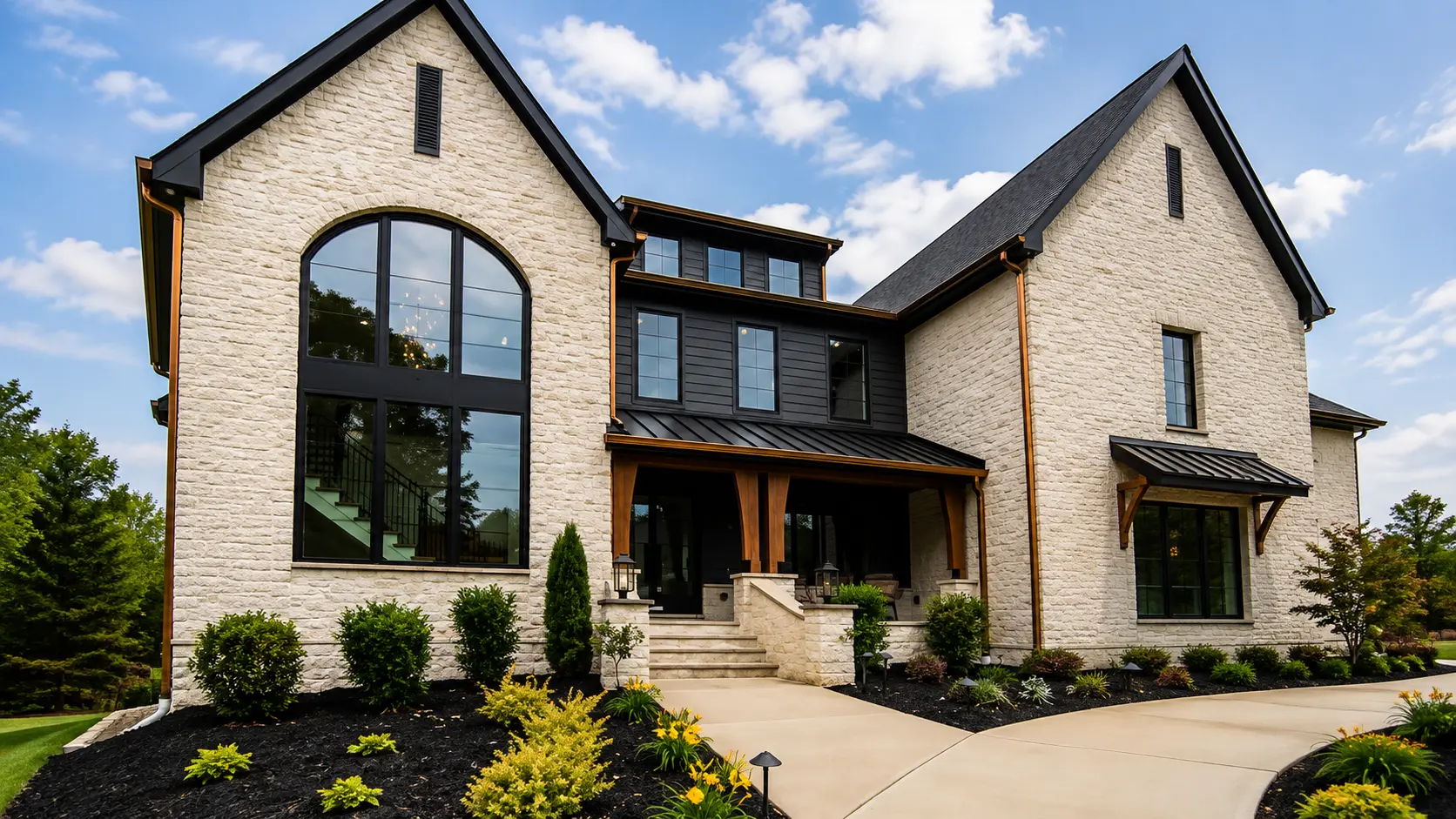
A brick façade can make window replacement look more complicated than it really is.
Around Saint-Constant and across the South Shore, the better starting point is the existing opening: its size, condition, depth and the way the current window is integrated into the wall.
If the opening can be kept and still works well for the room, there may be little reason to make the project more complicated.
If a change provides a real benefit, it should simply be treated as part of a broader wall and opening project rather than as a basic window swap.
Frequently Asked Questions
Do bricks always have to be removed to replace a window?
No. It depends on the existing configuration, the replacement method and the planned dimensions. Some installations can keep most of the existing opening and surrounding materials.
Are windows always more expensive to replace in a brick home?
No. Cost depends more on the actual scope of work, window dimensions, product choice, finishes and the condition of the opening.
Can a window be made larger in a brick wall?
Sometimes, but it can significantly increase the scope of the work. The opening and surrounding materials should be assessed before a new size is selected.
Does energy performance depend only on the glass?
No. Glazing matters, but measurements, frame integration, air sealing around the opening and installation quality also play an important role.