
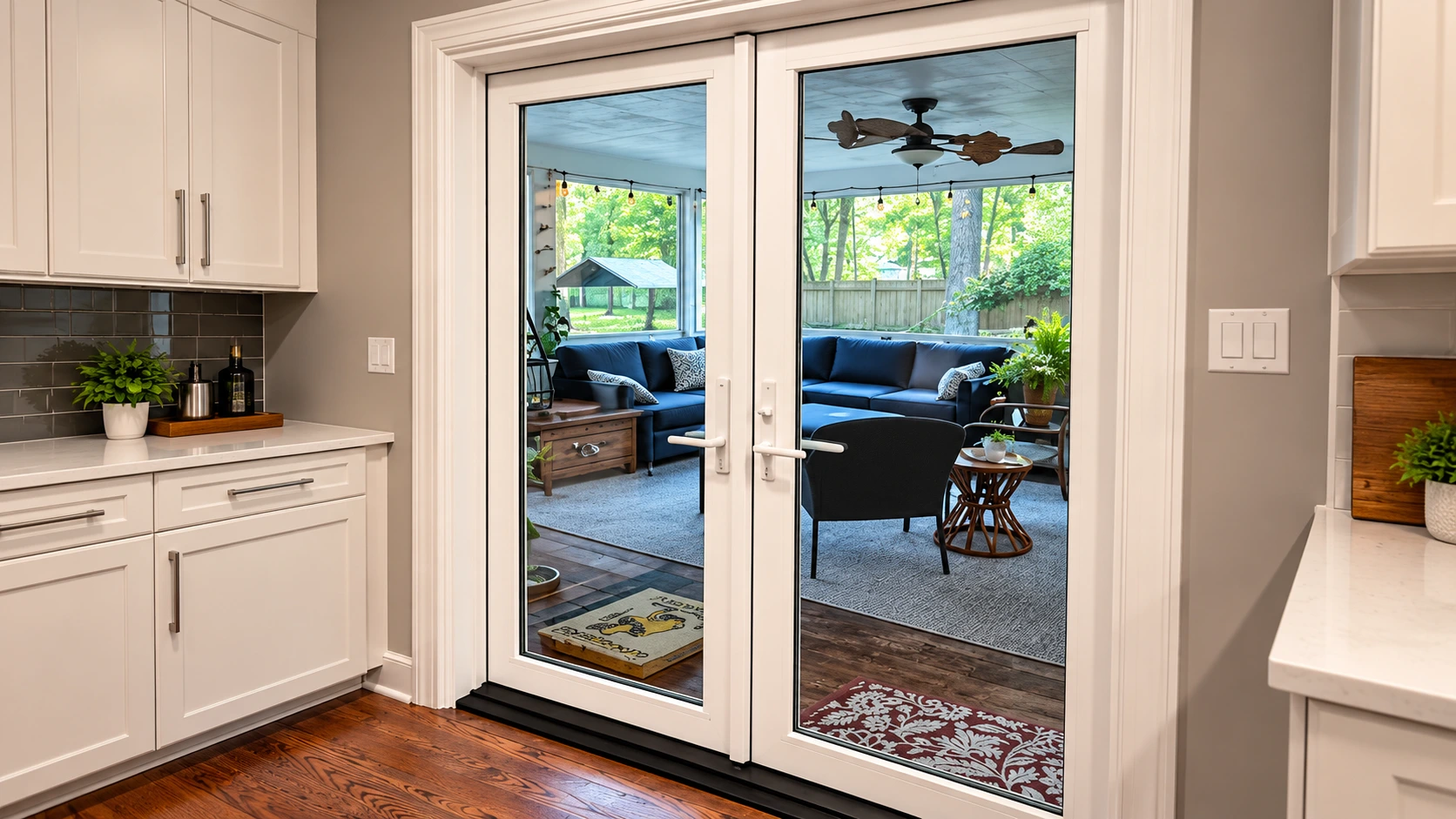
A large patio door can make a room bright and welcoming, but it can also contribute to overheating when direct sunlight reaches the glass. In some Saint-Constant and South Shore homes, the effect becomes particularly noticeable during hot summer afternoons.
When replacement is being considered, choosing the right patio door glass to reduce summer heat deserves attention. The number of glass panes matters, but it doesn’t fully explain how a patio door will perform in direct sunlight.
Why Does a Room Heat Up Near a Patio Door?
When sunlight passes through glass, some of its energy contributes to indoor heat gain. The amount depends on door orientation, glass area, time of day, glazing characteristics and shading.
A west-facing patio door may receive substantial direct sunlight during the late afternoon. However, roof overhangs, covered decks and trees can change the amount reaching the glass. Two homes with identical patio doors may experience very different indoor conditions. Understanding the actual exposure is important before selecting new glazing.
Understanding Solar Heat Gain Coefficient
Solar Heat Gain Coefficient, usually abbreviated as SHGC, describes the fraction of incoming solar energy that contributes to heat gain through a glazed product. Generally, a lower SHGC means less solar heat enters the home.
This may be beneficial for a large patio door exposed to strong sunlight during summer. However, the lowest coefficient isn’t automatically best. During winter, sunlight may help warm indoor spaces. Reducing solar gains can involve a trade-off depending on orientation and how the room is used. The right glazing choice should consider both seasons.
U-Factor Measures Something Different
U-factor describes heat transfer through a product when there is a temperature difference between indoors and outdoors. A lower value generally indicates better resistance to heat transfer.
SHGC helps explain how much solar energy contributes to indoor heat gain; U-factor describes thermal transfer through the complete product. A patio door may offer good thermal insulation without necessarily having the most suitable solar heat gain coefficient for its exposure.
Natural Resources Canada’s ENERGY STAR technical specifications for windows and doors explain the main performance measurements used for these products.
Low-E Glass Can Help Control Solar Heat
Low-emissivity glazing, commonly called Low-E glass, includes a coating that changes radiant heat transfer. Depending on the design, the coating can help reduce heat loss or control certain solar heat gains.
Not all Low-E glazing performs the same way. Two products may have different U-factor and SHGC values. It’s useful to request actual performance data rather than relying only on the Low-E designation. The appropriate choice depends on sun exposure and homeowner priorities.
Keeping Natural Light While Managing Heat
Natural light is often one of the main reasons homeowners choose a large patio door. Heat control should therefore be considered alongside visible light transmission. This measurement describes how much visible light passes through the product.
Some glazing configurations can limit part of the solar heat gain while allowing substantial natural light, although results depend on the specific product. Visible light and total solar energy are not the same thing. A relatively bright glazing product doesn’t necessarily allow the same solar heat gain as another option.
Double or Triple Glazing: Which Makes More Sense?
Triple glazing can improve certain aspects of thermal insulation and comfort. However, pane count alone doesn’t determine how much solar heat enters a room. Coatings, spaces between panes and the characteristics of the complete assembly also influence performance.
A triple-glazed patio door isn’t automatically the most appropriate choice for an overheated room. Compare U-factor, SHGC and visible light transmission of actual products. Additional cost also matters. Appropriate shading may sometimes change the situation without a door replacement.
Examine Orientation and the Existing Door
Before planning replacement, observe when the room becomes uncomfortable. Does the heat build mainly in the late afternoon? Does direct sunlight reach the glass? Is the door partly shaded? These observations help distinguish solar heat gain from other discomfort sources.
The existing door’s condition should also be considered. A relatively new patio door in good condition shouldn’t automatically be replaced simply because it allows sunlight into the room. However, significant aging, operating difficulties or poor airtightness may make a replacement assessment worthwhile.
When choosing a new patio door, orientation and glazing performance should be part of the planning discussion.
Installation Still Matters
Even a patio door with high-performance glazing must be properly fitted into its opening. Dimensions, frame alignment, surrounding joints and airtightness can influence comfort.
Air leakage and solar heat gain are different phenomena. Choosing glazing with a lower SHGC doesn’t automatically address poor airtightness. Likewise, better insulation doesn’t necessarily eliminate the effect of strong direct sunlight. These concerns should be evaluated separately.
Choose Glazing Based on How the Room Is Used
For a home in La Prairie, Candiac or Saint-Constant, the right patio door glazing depends on exposure, opening size and how the room is used. Budget, preferred daylight levels, winter thermal performance and the condition of the existing product should also influence the decision. The best choice isn’t necessarily the most expensive glass package.
Frequently Asked Questions
Does Low-E glass reduce summer heat?
Some configurations can help control solar heat gain. Comparing their specifications, particularly SHGC, is important.
Is triple glazing necessary for a patio door?
Not automatically. Its value depends on insulation goals, the complete product and budget.
Does a west-facing patio door need different glass?
Late-afternoon sun exposure deserves consideration, but shading and the home’s other characteristics also influence the choice.
Should a patio door be replaced just because a room gets hot?
Not necessarily. It’s better to examine solar exposure, shading and the door’s overall condition before deciding.