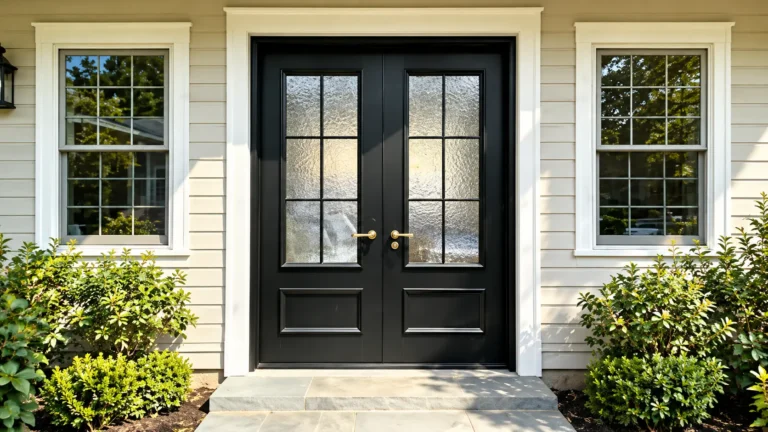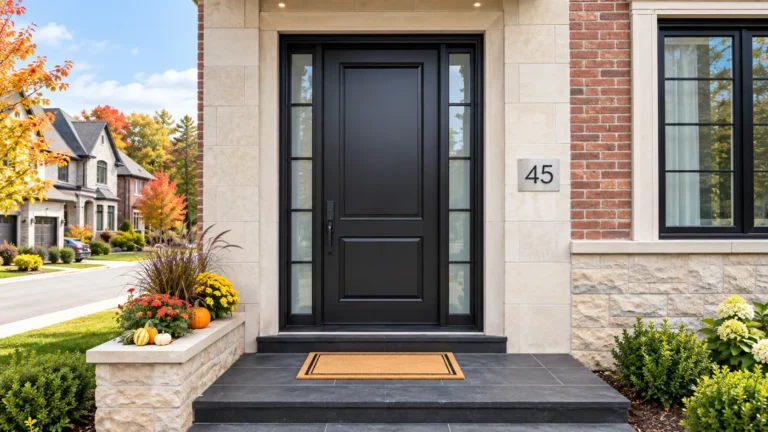

A dark entrance can make homeowners consider adding glass when replacing the front door. Some look at a door with a larger glass insert. Others consider an entry door with one or two narrow windows beside it.
Entry doors with sidelights can bring welcome daylight into a hallway or vestibule. But the decision should involve more than appearance. Privacy, usable doorway width, thermal performance and the existing opening can all affect the result.
For homes around Saint-Constant and neighbouring South Shore communities, the goal is to choose a configuration that works for everyday life.
What are sidelights?
Sidelights are glazed panels installed next to an entry door. A doorway may have one sidelight or a matching pair, depending on the available space and chosen design.
Unlike a window built into the door itself, a sidelight allows the main door panel to remain mostly solid while bringing light into the entrance.
That can be useful in a hallway with limited natural light. The additional glass can also make the entrance appear wider and more open.
However, the visual impression should not be confused with the actual width people can walk through.
A door assembly with two sidelights may be quite wide overall while still providing the same passage width as an ordinary single door.
How much privacy do sidelights provide?
Privacy should be considered before selecting the glass.
Depending on the position of the entrance, clear sidelights may give visitors or passersby a direct view into the house.
That may not matter if the entrance is set back or shielded from the street. It can be more noticeable when the front door faces a main living area.
Textured, frosted or otherwise less transparent glazing can provide another balance between daylight and privacy.
The best choice depends on what can be seen from outside, not simply which glass pattern looks attractive in a catalogue.
Decorative options may add cost. Before selecting one, decide how much privacy the room actually needs.
One sidelight or two?
One sidelight can brighten an entrance without expanding the glazed area more than necessary.
Two sidelights create a more symmetrical appearance and may suit an entrance where the door is centred within a broad opening.
But existing dimensions should guide the decision.
Adding sidelights to a doorway that currently has none may require enlarging the opening. That can affect structural elements, interior trim and exterior finishes.
A wider door assembly is not necessarily a straightforward replacement.
Before choosing a new layout, the opening should be assessed to determine whether it can accommodate the proposed product and what additional work would be involved.
Would a wider entry door be more useful?
Sometimes the real problem is not a lack of light but a narrow passage.
A wider door may make it easier to move furniture or bulky household items. Sidelights mainly improve daylight and the appearance of the entrance.
These are different benefits.
A wider door also needs suitable hinges, clearances and an appropriately designed opening. It may take up additional space when open.
If the existing passage is already comfortable, there may be little reason to undertake a major modification just to make the doorway bigger.
If the passage is genuinely restrictive, added sidelights will not solve that problem.
What about winter comfort?
More glass does not automatically mean a poorly insulated entrance.
The thermal performance of an entry door assembly depends on the glazing, frame, seals and installation.
A properly selected door with sidelights may offer better comfort than an older assembly with worn materials and poor thermal performance.
Natural Resources Canada provides information on ENERGY STAR certified windows and doors. Certification applies to qualifying products, not to the installation company.
The installation still needs to suit the opening. On the South Shore, exposed entrances must also contend with wind-driven rain, snow and winter temperature changes.
Good product specifications do not compensate for unsuitable connections between the door frame and the wall.
What should be checked before ordering?
An assessment should include the opening dimensions, door swing, available clearances, threshold height and surrounding finishes.
The positions of switches, trim and nearby walls may affect the configuration.
When reviewing entry door installation options, ask the supplier to identify the full assembly being quoted: the door panel, sidelight count, glazing, dimensions and finishing work.
This helps distinguish the price of a replacement within the existing opening from the cost of enlarging or changing the entrance.
A simpler configuration may be entirely adequate if it meets the need for light and keeps the passage comfortable.
Choose for light and everyday use
An entry door with sidelights can be an appealing option for a dark entrance, but it should fit the home rather than just the photograph that inspired the project.
Think about the view from outside, the amount of light you want and the width needed to move through the doorway.
A balanced design often matters more than adding the largest possible glass area.
Frequently Asked Questions
Are doors with sidelights less energy efficient?
Not necessarily. Performance depends on the complete assembly, including glazing, frames, seals and installation.
Can sidelights be added to an existing doorway?
Sometimes, but enlarging the opening may require additional structural and finishing work. The project needs an assessment first.
Can sidelight glass provide privacy?
Yes. Textured or translucent glazing can limit the view inside while still allowing daylight through.
Is a wider door better than adding sidelights?
It depends on the goal. A wider door addresses passage space, while sidelights are primarily about light and appearance.